
Anywhere and Everywhere
In Today’s Media Landscape, There’s No Dominant Channel

It used to be easy for campaigns and agencies. Make an ad, put it on broadcast TV, and millions of people would see it—most of the audience the campaign was trying to hit.
Now? Between YouTube, TikTok, Spotify, Hulu, podcasts, cable, and whatever else is new this week, the media landscape hasn’t just shifted, it’s exploded. And if your media plan hasn’t shifted with it, you’re probably overspending and underdelivering.
According to Nielsen’s latest report of ‘The Gauge’, streaming now accounts for over 45% of total TV viewing, overtaking both cable and broadcast (22% each). But don’t let those categories fool you. “Streaming” isn’t just one thing; it’s dozens of platforms. And the biggest players, like Netflix and Prime Video, don’t even take political ads.
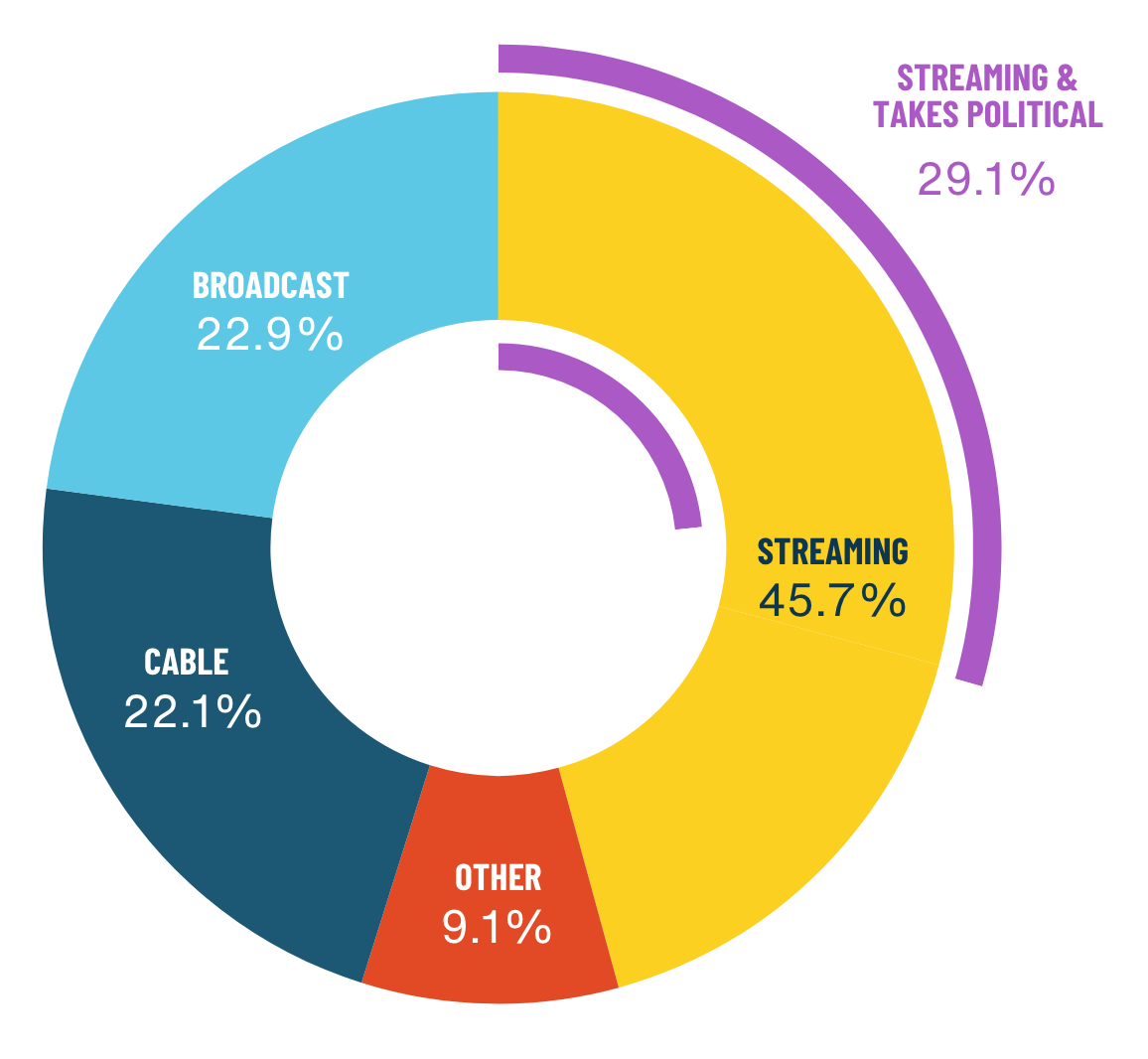
That’s where Nielsen’s new Ad-Supported Gauge comes in, breaking out how much of that time can actually be reached with ads. It’s a reminder that even in the biggest buckets, your ads only swim in a narrow lane.
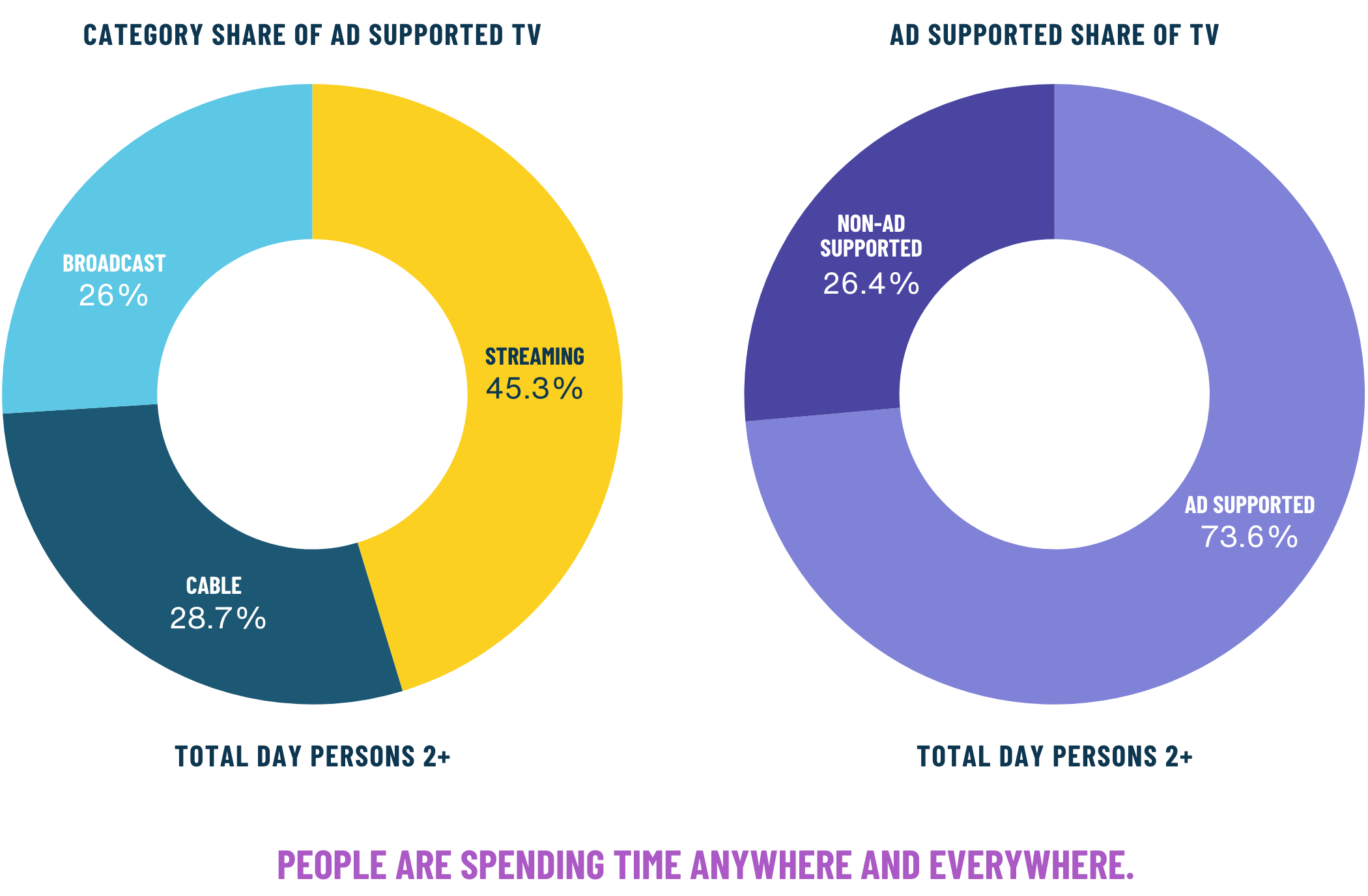
Here’s a snapshot of today’s media environment, where people are actually consuming content:
TikTok: Entertainment, news, politics, and persuasion in one infinite scroll.
Instagram & Facebook: Still sticky, especially for Millennial and Gen X voters.
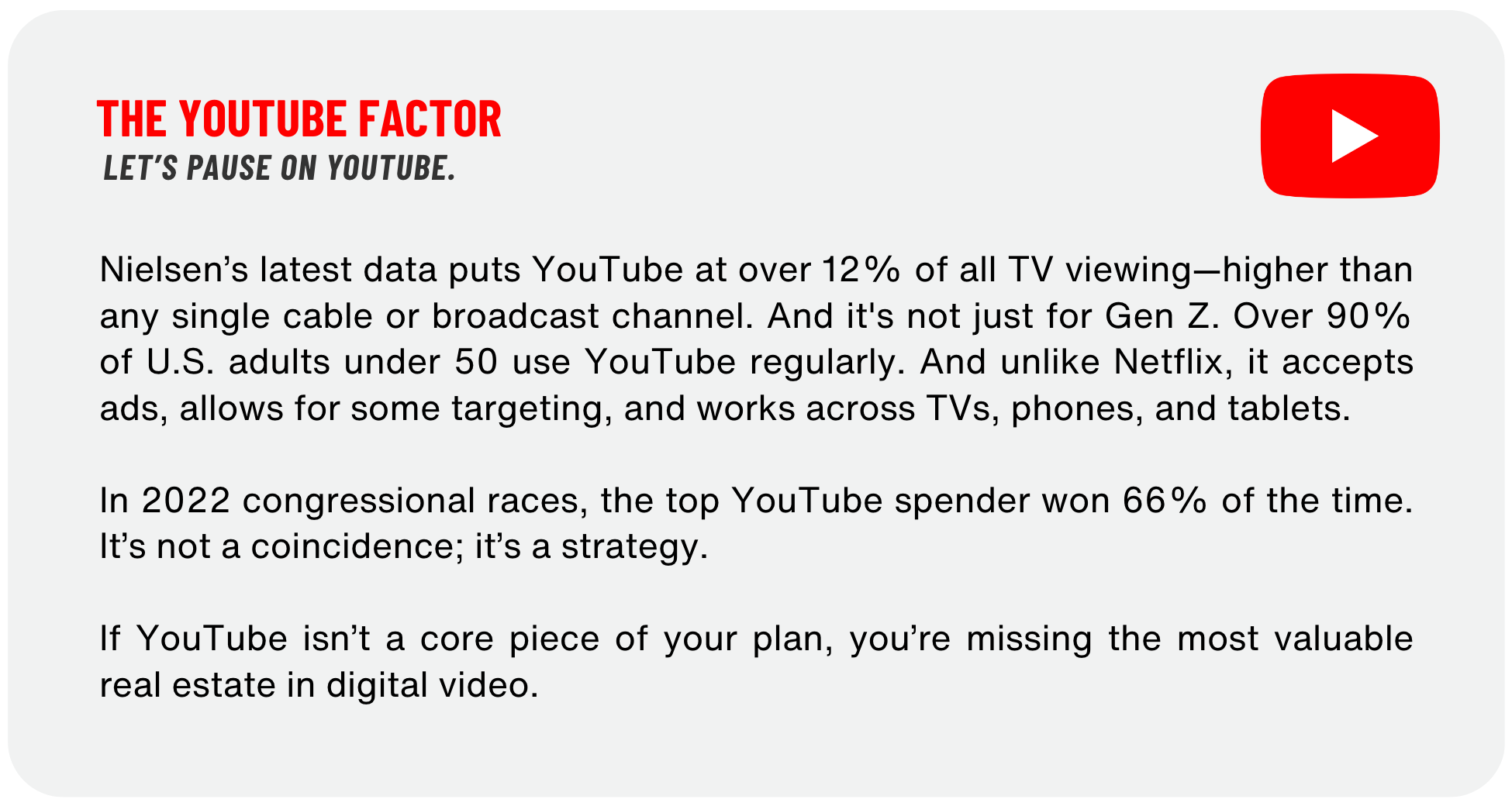
YouTube: Bigger than any broadcast channel.
Streaming TV: From Hulu to Max to Tubi, ad-supported platforms are growing fast.
Spotify, Podcasts, Music Apps: Underrated, but powerful.
Traditional TV & AM/FM Radio: Still strong, especially with older voters and the best at quickly saturating a message.
And everything else: Reddit, Twitch, mobile games, local news apps.
This doesn’t have to be a problem, though. It’s navigable if you plan for it.
In tight races, the difference between winning and losing is often who gets seen and where. We’ve seen it again and again: the campaign that invests in platform-specific creative, frequency-balanced targeting, and a smart media mix gets more bang for its buck and reaches the voters others miss.
A winning strategy today means:
Mapping your target audiences to where they actually spend time
Diversifying across streaming, social, video, audio, and traditional channels
Tailoring creative to the platform (don’t run your TV ad on TikTok)
Testing and optimizing, not “set it and forget it”
Balancing frequency to avoid both burnout and underexposure
Reaching people today takes work. But it’s not impossible. It’s just different. And in a world where 600 votes can decide a congressional race, that difference matters.