
Create, Test, Win.
In a game of inches, where the thinnest margins decide the direction of the country, randomized controlled trials (RCTs) are essential.

The closest US House race in America was decided by less than 600 votes. Democrat Adam Frisch lost to Republican Lauren Boebert — 163,293 votes to 163,839 votes.
The 2020 Presidential was decided by just under 40,000 votes in 3 states. The 2016 Presidential was decided by just under 80,000 votes in 3 states.
Power in America is decided by thin, thin margins.
After the fall of Roe v. Wade increasingly state ballot initiatives around fundamental rights are decided by thin margins.
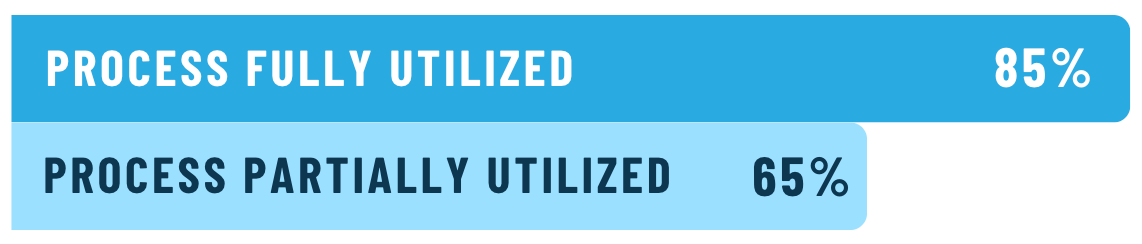
With the country so closely divided and the stakes so high, it's essential to engage in a rigorous process of research and testing. At CMG, we use creative testing because we know it works. When clients followed our process in 2022, at the federal and state level, they won 85% of the time.
Our Process
Increasingly, the last step in that process, creative testing or randomized controlled trials, provides rigor and insight that is driving significant changes in outcomes. See the steps in our process just below:
Conduct research and polling
Craft the message
Build out many creatives
Test creatives
Launch campaign
Assess results & repeat
In 2022, with the help of ally organizations and Blue Rose Research, the campaign to save choice in Michigan tested more than 50 pieces of creative.
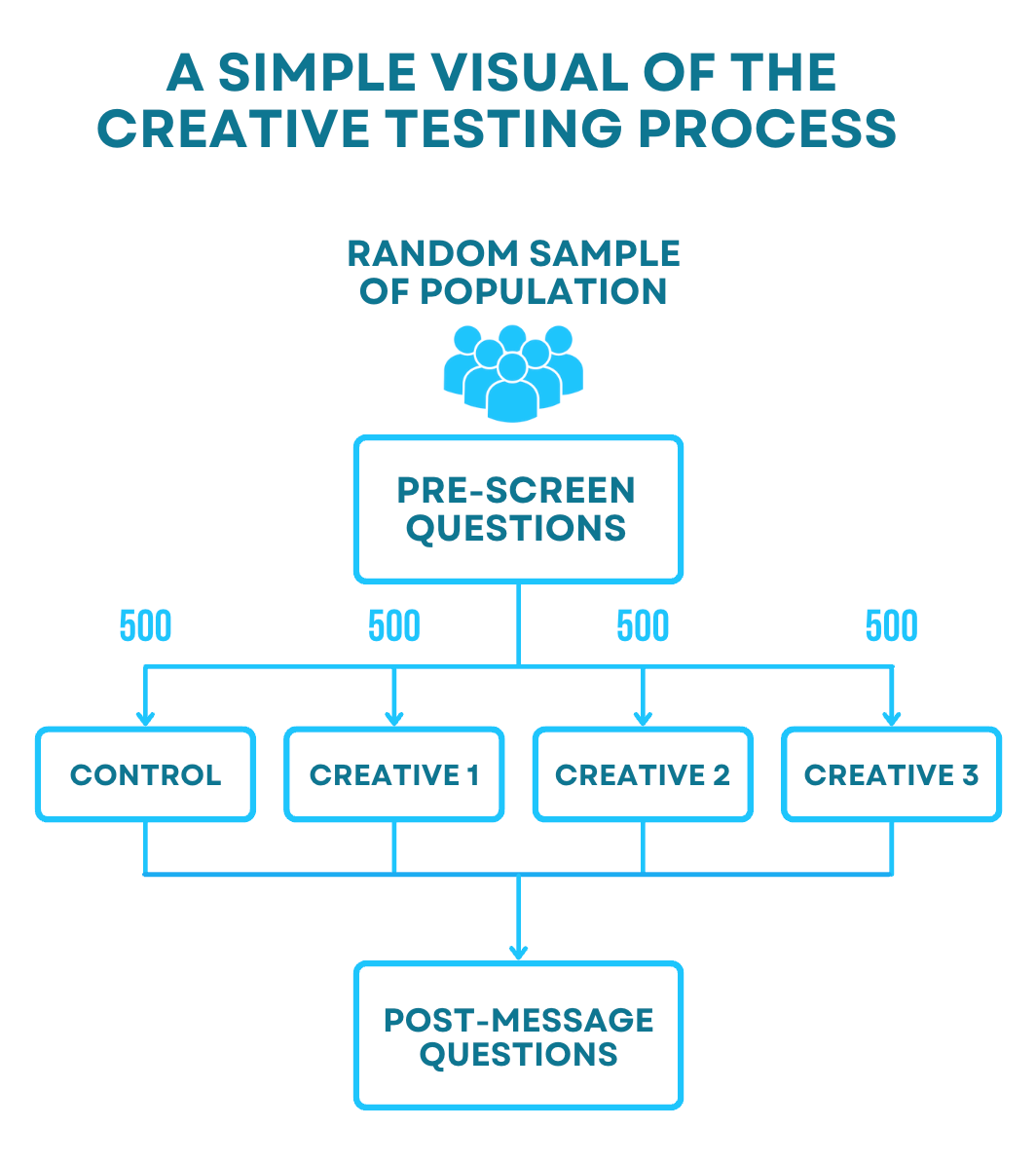
This process of creative testing, learning, and iterating led to very high-performing pieces of creative and a large difference between the best and worst performing pieces of creative.
At CMG we encourage our clients to use this tried and true process to give them the best chance of success.
Across all of our programs in 2022, clients who leveraged polling and creative testing won 85% of races, compared to just 65% when these tools were not fully utilized.
Using polling and creative testing to your advantage increases your chance of winning and ensures your ad dollars are used as effectively as possible.
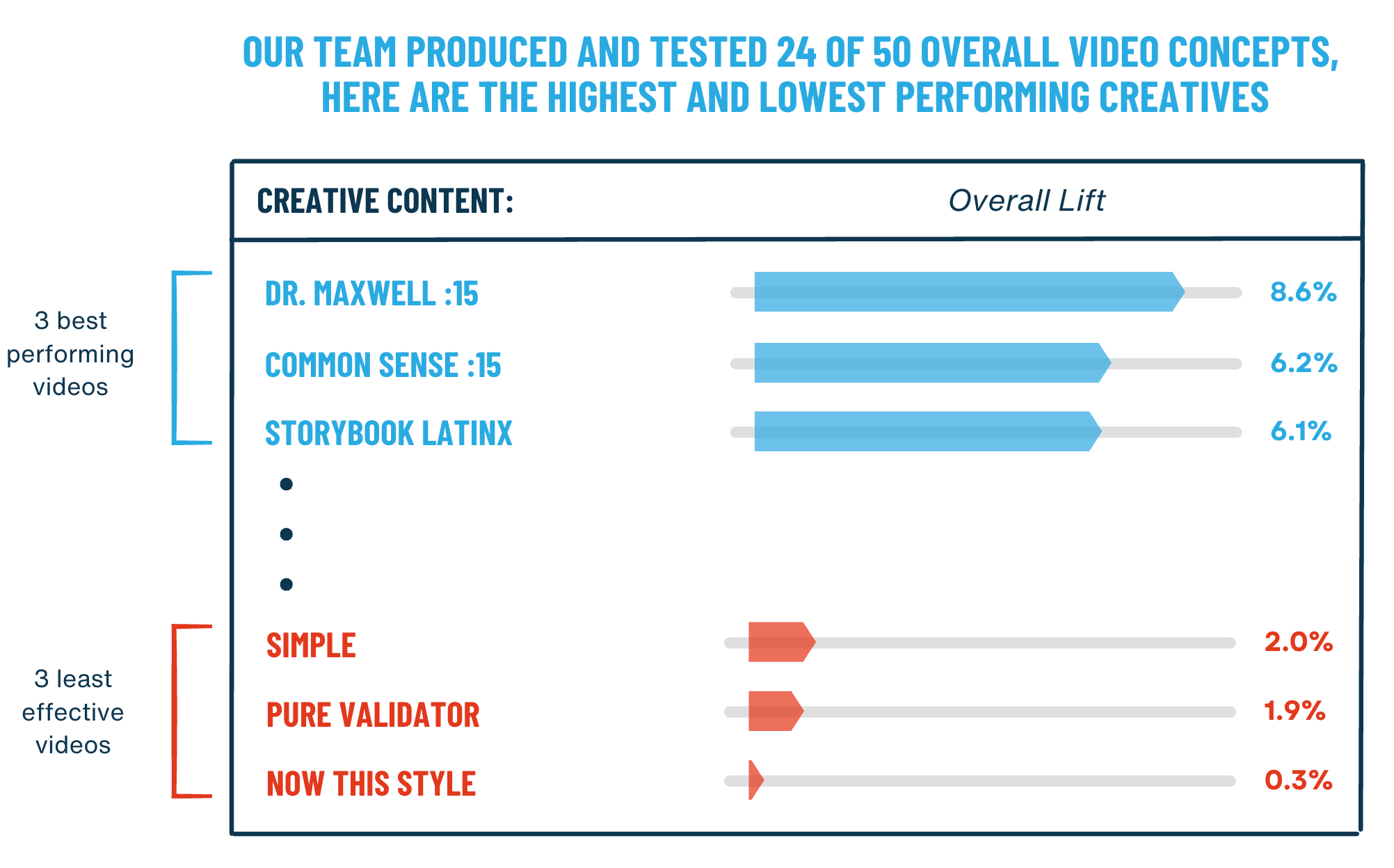
We know this approach worked because we could see it move poll numbers, but there are other ways of measuring success and the effectiveness of finding the best ad.
A good measure of a ballot initiatives' overall advertising and messaging effectiveness is awareness. In Michigan, the pro and anti-choice campaigns in 2022 spent more than $70 million dollars and in California it was nearly $400 million dollars. That amounts to $16 per voter in Michigan and about $36 of spending per person in California.
As the chart below shows, despite half as much spending per voter, the Michigan ads achieved much higher awareness with an 18% higher recall rate.
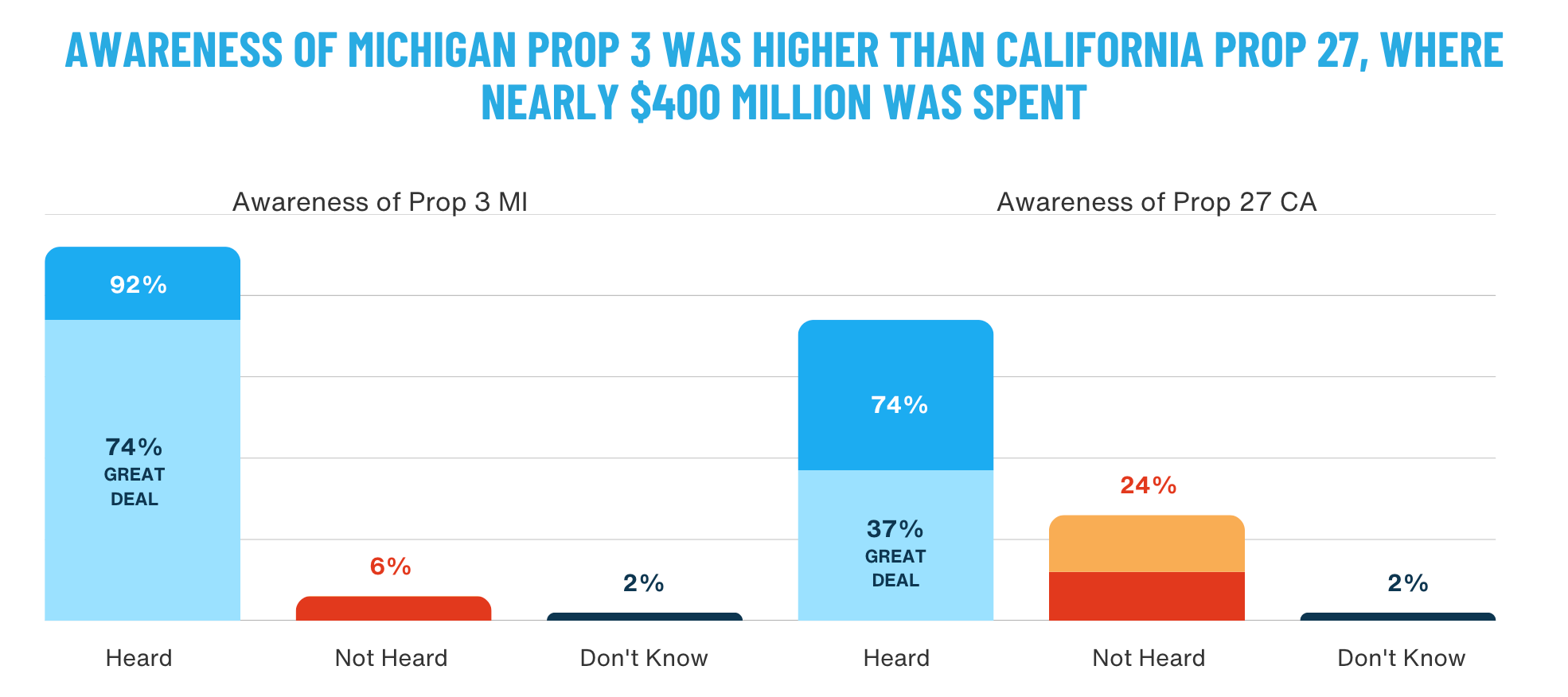
Many factors played a role in the difference between the two states, but a rigorous testing effort was certainly one big factor.
Ready to win more? Create, test, deploy, repeat and it will lead to more wins!